
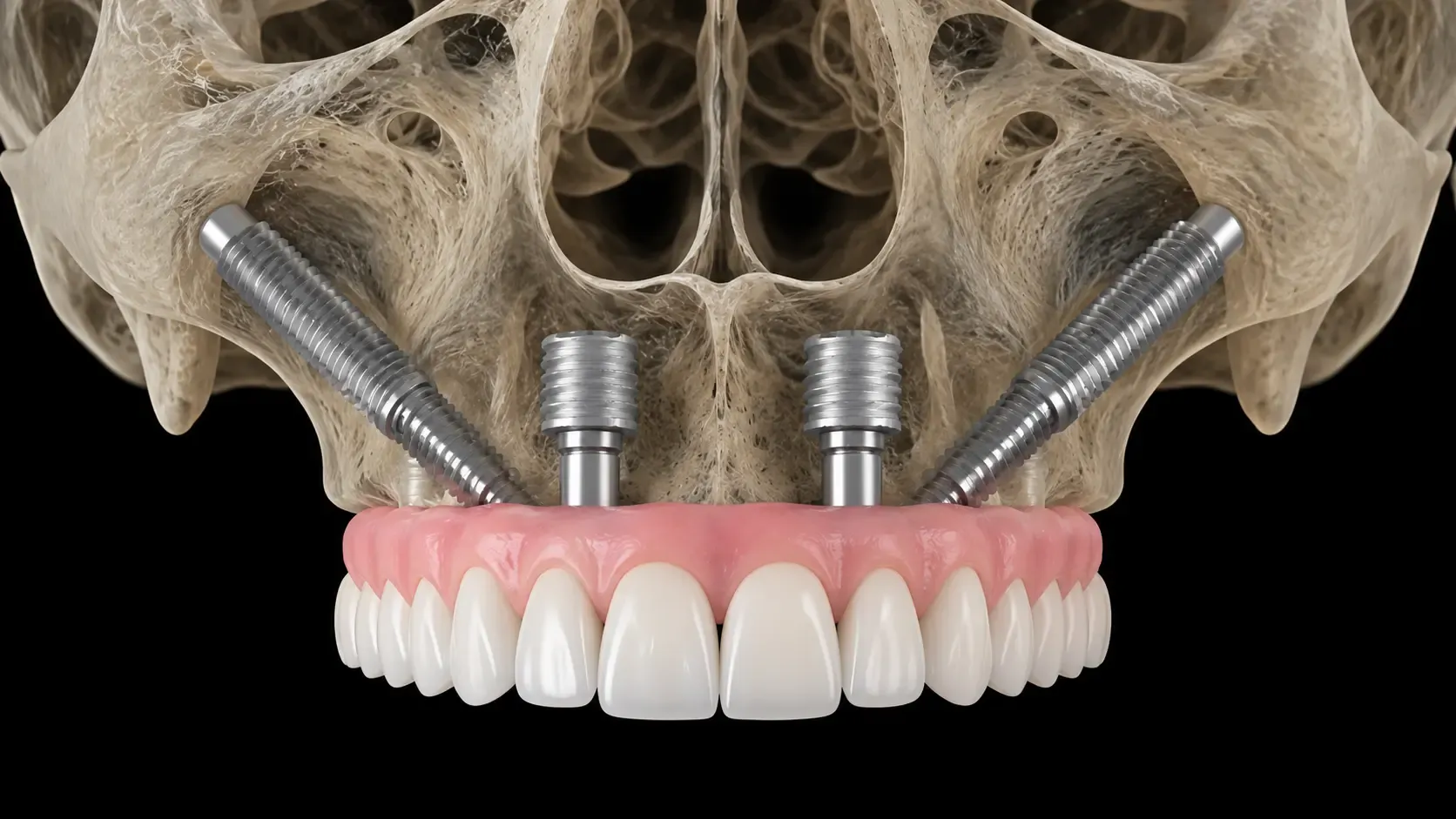

Full-arch dental implant treatment has changed significantly over the past few years. Patients are now seeing more treatment options, more digital planning, and more discussion around questions such as how many implants are needed, whether temporary teeth can be fitted immediately, and how the final restoration should be designed.
In 2026, new global consensus guidance brought these questions together into a clearer framework for treating people who have lost all, or nearly all, of their upper teeth.
The guidance does not promote one fixed treatment formula. Instead, it places greater emphasis on individual planning, looking at available bone, implant stability, bite, the position of the future teeth and long-term maintenance before deciding how treatment should proceed.
For anyone considering full set dental implants in Sydney, this is a useful development because it helps explain why two patients with similar tooth loss may receive very different treatment recommendations.
3D Imaging Is Becoming Central to Full-Arch Planning
One of the clearest recommendations concerns three-dimensional imaging.
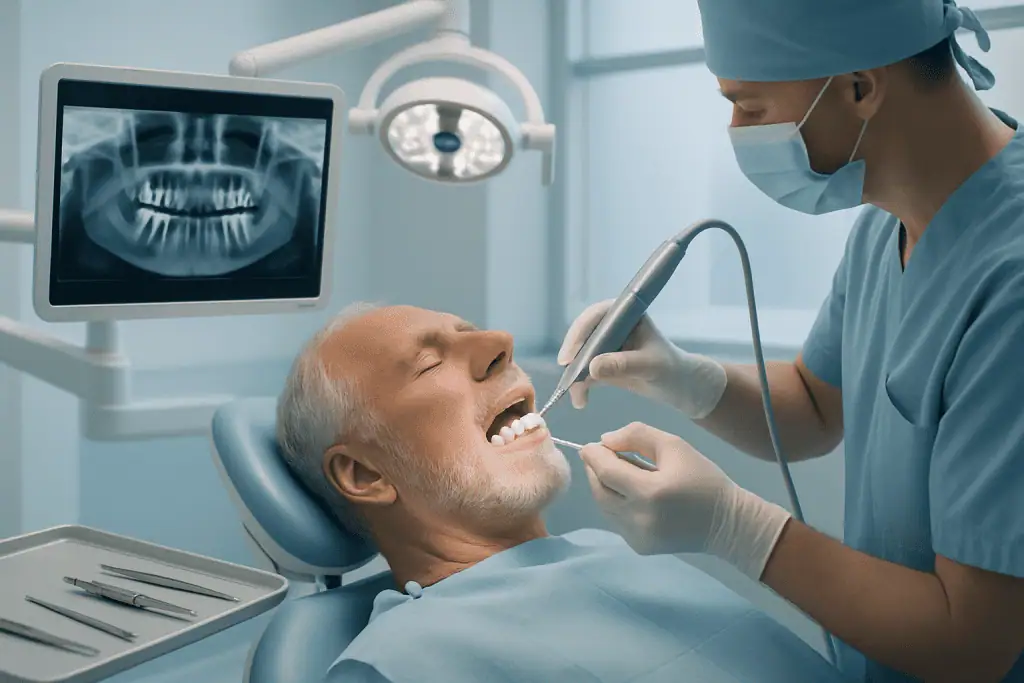
The consensus recommends CBCT scanning for people undergoing full-arch implant rehabilitation. A CBCT scan gives clinicians a three-dimensional view of the jaw and helps assess available bone and important anatomical structures before implant positions are planned.
For patients, this can help answer questions such as:
- How much bone is available?
- Where could implants potentially be positioned?
- Could bone augmentation be required?
- How will the proposed replacement teeth relate to the implants underneath?
The 2026 Global Consensus for Clinical Guidelines also supports combining imaging with prosthetic planning.
That means planning the future teeth and the implants as connected parts of the same treatment.
Planning Is Increasingly Starting with the Replacement Teeth
Modern full-arch dental implant treatment planning is increasingly described as prosthetically driven.
In everyday language, this means thinking about where the final replacement teeth should be positioned before deciding exactly where the implants should go.
Planning may involve:
- Assessing the patient’s bite, facial features and remaining teeth
- Planning the position and shape of the replacement teeth
- Reviewing the available jawbone using 3D imaging
- Selecting implant positions that can support the proposed restoration
- Deciding whether any additional procedures may be required
This helps explain why the treatment for dental implants in Sydney can differ considerably from one patient to another.
Two people may both need a full upper set of replacement teeth, yet have very different bone levels, bite patterns, gum loss or medical considerations.
Four Implants or Six? There Is No Fixed Answer
Patients researching full-arch treatment often encounter terms such as All-on-4 and All-on-6 early in their search.
The 2026 consensus reinforces that implant number should be decided as part of the wider treatment plan.
In the expert survey supporting the recommendations, many clinicians favoured six implants for fixed upper-jaw restorations where conditions allowed. That does not mean six implants are automatically preferable for every patient.
The decision can be influenced by:
- Available bone: The amount and quality of jawbone can affect where implants can be placed and whether additional procedures, such as bone grafting, need to be considered.
- Implant stability: Dentists need to assess how firmly the implants are anchored at the time of placement, especially if immediate loading or temporary fixed teeth are being considered.
- Bite forces: The way a patient bites and distributes pressure across the jaw can influence implant number, positioning and the design of the final restoration.
- Implant distribution: It is not only the number of implants that counts. Their position across the arch also affects how chewing forces are shared and how well the restoration is supported.
- The planned replacement teeth: The size, position and design of the future teeth can influence where implants are ideally placed and what type of prosthesis is suitable.
- Individual anatomy: Jaw shape, sinus position, remaining bone, gum levels and other anatomical features vary from person to person and can change the treatment approach.
Patients who want to understand these differences can also read about All-on-4 vs All-on-6 before discussing the options with their dentist.
Patients shouldn’t be wondering, “Are four or six implants better?” but, “Why is this particular number being recommended for me?”
Same-Day Teeth Still Depend on Clinical Conditions
Immediate loading remains one of the most discussed areas of implant dentistry.
It generally refers to connecting a provisional set of replacement teeth to the implants shortly after they are placed.
For patients researching immediate load dental implants, the 2026 guidance reinforces that same-day provisional teeth depend on clinical conditions rather than a fixed treatment promise.
Suitability may depend on factors such as:
- Bone quality and volume
- Initial implant stability
- Implant distribution
- The design of the temporary restoration
- Whether grafting is required
- The patient’s general and oral health
This is why phrases such as “same-day teeth” should not be interpreted as a guarantee that every patient will follow the same treatment timeline.
Some people may be suitable for immediate loading, while others may need more healing time before their implants support a fixed restoration.
Preserving Existing Bone Is Receiving More Attention
The consensus also supports preserving existing bone and soft tissue where clinically appropriate.
Full-arch reconstruction can sometimes involve reshaping bone to create space for the prosthesis. Newer treatment planning encourages clinicians to consider whether the existing anatomy can be retained when bone levels, smile line and restorative requirements allow.
This can influence the design of the final teeth.
A patient with substantial bone and gum loss may require a different type of restoration from someone whose jaw structure and soft tissues have been better preserved.
The visible teeth are only one part of the treatment. The bone and gums supporting the restoration influence how the final result is planned.
What Should Patients Ask Before Full-Arch Treatment?
For patients, the new guidance provides a useful framework for conversations during consultation.
Questions worth asking include:
- Why has this number of implants been recommended for me?
- Will CBCT imaging be used for planning?
- How are the positions of my future teeth being planned?
- Am I suitable for immediate loading?
- Could I need bone grafting or another additional procedure?
- What will I wear while the implants heal?
- How will I clean around the final restoration?
- What ongoing maintenance will be required?
Sydney patients researching their options may also come across local information from Tooth Implant Sydney when comparing full-arch and other implant treatments. Such online information can be useful for initial research, but individual suitability still needs to be assessed clinically.
Full-Arch Treatment Is Becoming More Individualised
The 2026 consensus does not recommend one fixed approach for every person who needs a full set of replacement teeth.
Treatment planning may vary according to bone volume, implant position, bite, prosthetic design, loading strategy and long-term maintenance needs.
This is why patients with similar levels of tooth loss may still receive different recommendations.
Before proceeding, patients should understand why a particular treatment plan has been suggested, whether alternatives are available, and how factors such as bone quality, implant stability and the proposed restoration have influenced the recommendation.
If any part of the treatment plan is unclear, it is reasonable to ask the treating dentist or implant team to explain the options in simpler terms before making a decision.
Source
