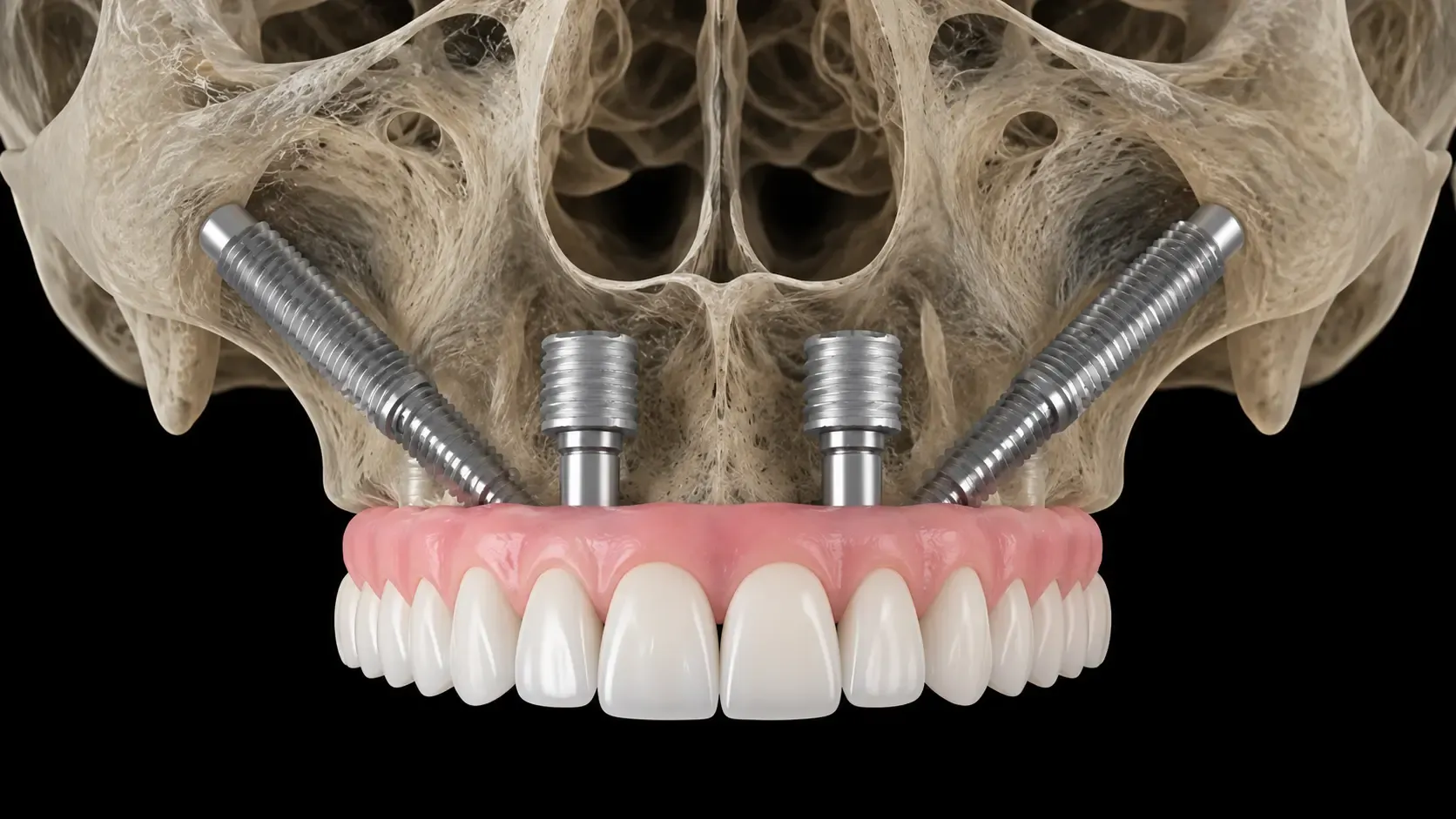


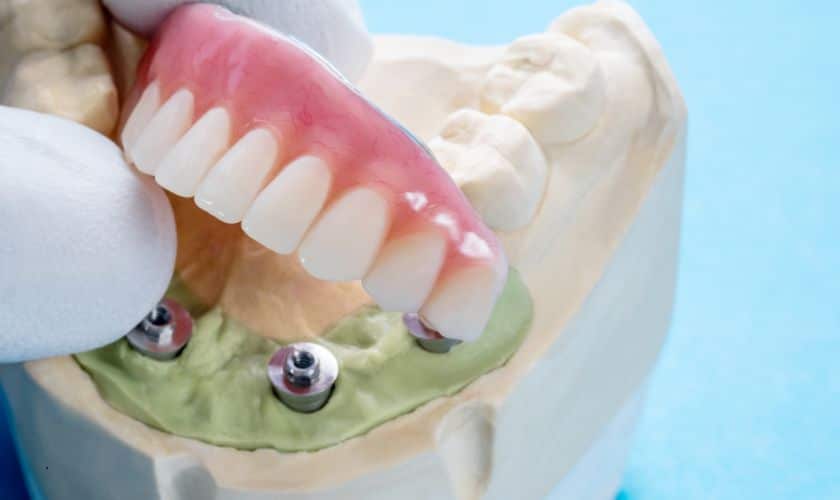
Food trapped beneath an All-on-4 bridge usually sits between the underside of the fixed teeth and the gum. It does not travel beneath the titanium implants or enter the jawbone.
Some particles move when you drink, rinse or use your tongue. Others stay in areas that a toothbrush cannot reach and need to be removed with the cleaning method recommended for your restoration.
An occasional trapped particle does not usually mean an implant is failing. A recurring problem, particularly with bleeding, swelling, pain, discharge or a persistent unpleasant taste, needs professional assessment.
Important distinction: The implants are the titanium fixtures placed within the jawbone. The bridge is the fixed row of replacement teeth attached to them. Food becomes trapped beneath the bridge, not beneath the implants inside the bone.
First, Where Is the Food Actually Getting Stuck?
An All-on-4 restoration has several connected parts.
The implants sit within the jawbone. Components above the implants support a fixed full-arch bridge, which replaces the visible teeth and may also replace some lost gum contour.
Between the underside of that bridge and the natural gum is an area that needs to remain cleanable. This is where food may collect.
When patients describe food stuck under All-on-4 implants, they are usually referring to food beneath the implant-supported bridge or around the components where the restoration meets the gum.
The food is not inside the implant fixture.
What Actually Happens to Trapped Food?
Food can pass beneath the edge of the bridge during chewing. Small grains, seeds, leafy vegetables and fibrous pieces of meat may be particularly noticeable.
After entering the space, the food may:
- Shift with saliva, drinking or rinsing;
- Be moved by the tongue;
- Remain against the underside of the bridge;
- Become mixed with plaque in an area that is difficult to brush;
- Produce an unpleasant smell or taste as bacteria break down the debris.
It does not dissolve immediately. It is not absorbed by the implant, and it cannot pass through a properly integrated titanium fixture into the jawbone.
The main concern is not one isolated piece of food. It is debris and plaque remaining around the bridge and gum-level implant components because the area cannot be cleaned effectively.
The American College of Prosthodontists recommends daily home care and continuing professional maintenance for fixed full-arch implant restorations.
Is It Normal for Food to Get Under an All-on-4 Bridge?
Some food movement beneath a fixed bridge can occur.
The bridge must balance appearance, comfort, speech, chewing strength and hygiene. A restoration pressed tightly against the gum with no cleaning access may prevent a patient from reaching plaque beneath it.
That does not mean that food constantly getting under an All-on-4 bridge should be dismissed as unavoidable.
The amount of trapping can vary according to:
- The contour of the bridge;
- The shape of the jaw and gum;
- The position of the implants;
- Tissue changes during healing;
- The type of food;
- The patient’s chewing pattern;
- The amount of access available for cleaning.
Occasional debris that can be removed with the recommended routine may not indicate a problem. A sudden increase, repeated trapping in one place or an area that cannot be cleaned deserves closer examination.
Why Might Food Keep Collecting Beneath the Bridge?
Bridge design and contour
The underside of the bridge should allow cleaning. A bulky surface, a deep curve or an area that is difficult to reach may retain more debris.
Healing-related tissue changes
The gums can change shape after surgery. As swelling settles and the tissues remodel, the space beneath a provisional or final bridge may become more noticeable.
Individual anatomy
Jaw shape, gum contour and implant position differ between patients. An area that is simple to clean on one restoration may be harder to reach on another.
The type of food
Seeds, rice, nuts, leafy vegetables and fibrous meat can enter small spaces. Sticky food may remain against the bridge even after rinsing.
A change in the bridge or surrounding tissues
New food trapping may be associated with a tissue change, a damaged surface, a gap that has become larger or a component that needs assessment. The sensation alone cannot show which explanation applies.
Follow this daily dental implant care routine to maintain your oral health.
How Do You Clean Food from Beneath an All-on-4 Bridge?
Brushing remains necessary, but a toothbrush cannot reach every surface beneath a fixed full-arch restoration.
The most suitable cleaning method depends on the shape of the bridge and the amount of access beneath it. A dental professional may recommend:
- A soft toothbrush
- Implant floss or super floss
- A floss threader
- An appropriately sized interdental brush
- A water flosser used at a suitable pressure and angle
- Rinsing after meals
- Scheduled professional maintenance
The aim is to clean the surface beneath the bridge without injuring the gum. Patients should be shown where the cleaning device enters, how it passes beneath the restoration and how much pressure to apply.
Do not use pins, metal picks or other sharp objects beneath the bridge. Do not force an interdental brush through a space that is too small. This can injure the gum or damage the restoration.
When is Food Trapping a Reason to See Your Implant Dentist?
Arrange an assessment when:
- Food trapping becomes noticeably worse
- Debris repeatedly collects in one area
- The recommended cleaning aid no longer passes through the space
- Bleeding or swelling persists
- There is pain, tenderness, pus or discharge
- A bad taste or smell continues after cleaning
- The bridge clicks, moves or feels different
- Part of the restoration appears chipped or damaged.
These signs do not automatically mean an implant is failing. They do suggest that the bridge contour, gum tissues, connecting components and cleaning access should be checked.
Cleaning more aggressively is not always the answer. The dentist may need to demonstrate a different technique, assess a tissue change or determine whether the restoration requires attention.
The Key Point
Food that becomes trapped around an All-on-4 restoration usually sits between the bridge and gum. It does not normally enter the implants in the jawbone.
Some particles are easily rinsed away. Others require floss, an interdental aid or oral irrigation suited to the bridge design.
Recurring food trapping is worth discussing with the dental team, especially when it develops suddenly or occurs with bleeding, swelling, pain, discharge, movement or persistent odour. The aim is not to create a completely sealed space beneath every bridge. It is to provide a stable restoration with surfaces that can be cleaned safely and consistently.
Frequently Asked Questions
1. Does food go inside All-on-4 dental implants?
No. The implants are titanium fixtures placed inside the jawbone. Food may collect beneath the fixed bridge or around the components where the bridge meets the gum, but it does not normally enter the implant fixtures.
2. Will trapped food eventually come out by itself?
Some food may shift when you drink, rinse or move your tongue. Other particles can remain beneath the bridge until they are removed with implant floss, an interdental brush or a water flosser recommended for the restoration.
3. Does food trapping mean the All-on-4 bridge does not fit properly?
Not necessarily. Some access is required beneath the bridge so the area can be cleaned. However, excessive food trapping beneath fixed implant teeth may justify an assessment of the bridge contour, tissue changes and cleaning technique.
4. Can an All-on-4 bridge be adjusted if food keeps getting trapped?
Sometimes. The appropriate response depends on the cause. A dentist may review the cleaning method, examine the bridge contour, assess changes in the gum or investigate whether a component needs attention.
5. Why does food beneath an All-on-4 bridge smell?
Food debris and plaque can remain on surfaces that are difficult to reach. Bacteria breaking down that debris may produce an unpleasant smell or taste. Persistent odour, particularly with bleeding, swelling, pain or discharge, should be assessed.
Any surgical or invasive procedure carries risks. Before proceeding, you should seek a second opinion from an appropriately qualified health practitioner.
