

Pain that settles, then returns as soon as you lift, run, sit longer or restart exercise, usually needs more than another massage, manipulation or stretch. Modern rehabilitation is moving away from short-term symptom relief and toward guided strength, control and load tolerance. That is one reason physiotherapists use Clinical Pilates in injury rehabilitation.
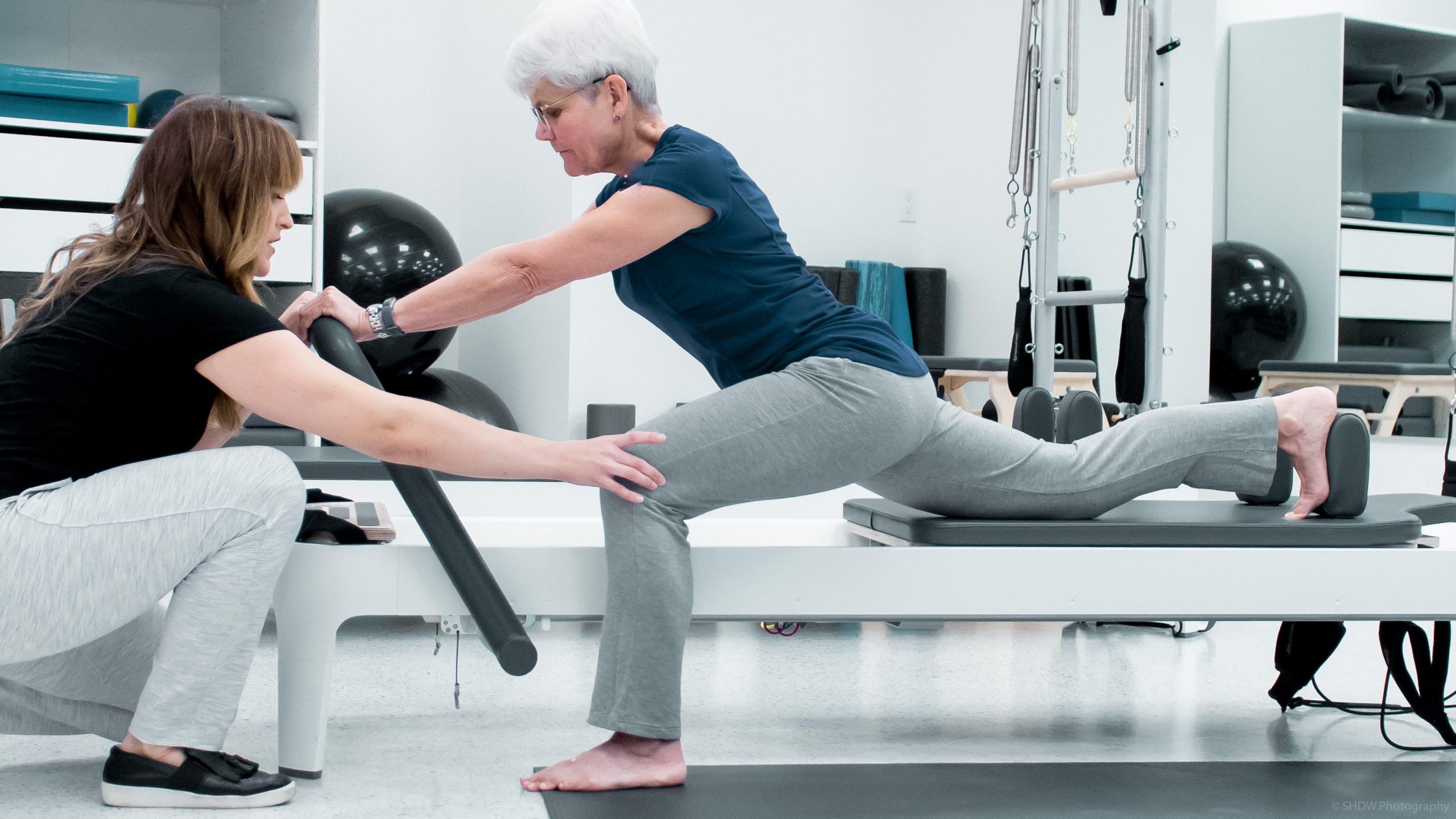
Clinical Pilates is not the same as joining a general reformer class. In a rehabilitation setting, the Pilates exercises are chosen because of your assessment, symptoms, strength, movement habits and goals. At MD Health, we use injury recovery Pilates as part of a broader clinical exercise approach, not as a one-size-fits-all routine.
Rehabilitation has to rebuild capacity, not just reduce pain
Pain reduction matters, but it is not the whole job. A shoulder, hip, back or knee may feel better after rest, then flare again because the body has not rebuilt enough capacity for normal life.
Good rehabilitation asks clearer questions. What movements trigger symptoms? How quickly does pain settle? Is strength different on one side? Is the person avoiding movement because they no longer trust the area? Has the person returned to normal activity too quickly, or avoided loading for too long?
Clinical Pilates gives practitioners a controlled way to adjust load, range, support, speed and complexity. The goal is to choose the right starting point, then progress it based on response.
This matters because rehabilitation is rarely a straight line. Some people need more strength. Some need better control. Some need to reduce irritation before building intensity. Others need confidence moving again after a long period of pain.
Clinical Pilates gives physiotherapists more ways to control load
Many injuries become harder to manage when exercise is either too easy to create change or too hard for the irritated tissue. Clinical Pilates gives physiotherapists and exercise professionals a useful middle ground.
A person with back pain might need trunk control, hip strength and confidence bending again. A runner with knee pain might need hip, calf and thigh strength before returning to hills or speed work. A person recovering after a shoulder injury might need controlled shoulder blade, trunk and arm work before pressing overhead.
This is where supervised sports rehabilitation Pilates can be useful. The session can be adapted to the sport, the injury and the stage of recovery without turning every session into high-intensity training.
The less obvious point is that load is not only about weight. It can also come from range of motion, balance demand, repetition, speed, fatigue, position and how much support the person has during the movement. Small changes can make an exercise easier, harder or more specific to the person’s goal.
General Pilates and clinical Pilates are not the same
| General Pilates class | Clinical Pilates in rehabilitation |
|---|---|
| Often follows a class plan | Built around assessment findings |
| Similar exercises for the group | Exercises adjusted to the person |
| Fitness or conditioning focus | Progression toward function |
| Less focus on irritability | Tracks symptoms and response |
A general class can suit some people. It is not the right starting point for every injury. If pain is persistent, worsening, one-sided, linked to weakness, or returning every time training resumes, assessment is the cleaner path.
The useful detail is what happens after the session
The exercise itself matters. The response after exercise matters just as much.
A good rehabilitation program looks at what happens later that day and the next day. Did symptoms settle quickly? Did the person feel stronger or more irritated? Was soreness expected muscle effort, or did it feel like the original pain? Did movement improve, or did the person become more guarded?
This feedback helps the practitioner decide whether to progress, repeat, reduce or change the exercise. Without that review process, people often bounce between rest and flare-up.
That is why we use clinical Pilates rehabilitation as part of a structured clinical exercise model. Founded in 2002 by Managing Director and Senior Physiotherapist Michael Dermansky, MD Health has built its approach around assessment, supervised exercise, review and long-term strength.
When Clinical Pilates is not the first step
Clinical Pilates can be part of injury care, but it is not the answer to every problem. Some people need a one-off physiotherapy, exercise physiology or osteopathy consultation first. Others need a clearer diagnosis, medical referral or an imaging review.
Pain also needs context. Pain does not always mean damage, but it should not be ignored when it persists, worsens, keeps returning, or limits normal activity. Strength, sensation, swelling, irritability, past injury, surgery history and general health all change the right starting point.
Seek urgent medical care if you have severe or worsening pain after trauma, new weakness or numbness, loss of bladder or bowel control, chest pain, fainting, fever with severe pain, sudden swelling, redness or heat, or any symptom that feels unusual, severe or rapidly worsening.
FAQs
Is Clinical Pilates only for back pain?
No. It is often used for back, hip, knee, shoulder, neck and recurring movement-related problems, depending on the assessment. The right exercises depend on the person, the condition and the response to loading.
Do I need to be fit before starting?
No. The starting point should match your current strength, confidence and symptoms. Clinical Pilates in rehabilitation should not assume that everyone can begin with the same exercises or intensity.
Is Clinical Pilates better than gym training?
Not always. Some people need controlled exercise first. Others need strength training, sport-specific loading or a mix of both. The better option depends on the goal, symptoms and stage of recovery.
Start with assessment, then build the program
If you are recovering from injury, the main question is not which exercise looks best. It is what your body can tolerate now, what needs to improve, and how progression will be measured.
For supervised exercise built around your current strength, symptoms and goals, start with our Clinical Exercise & Pilates program or contact our team if you are unsure which booking path fits your situation.

